
Pentagon Activates First Operational AI Drone Swarm Under Replicator Program in the Pacific
The Department of Defense on Monday confirmed the first operational deployment of an autonomous AI-controlled drone swarm under the $1 billion Replicator initiative, with more than 1,000 attritable air and sea vehicles now fielded across Indo-Pacific Command. Officials called the milestone a 'force-multiplier moment' that could redefine deterrence math against China inside the First Island Chain.
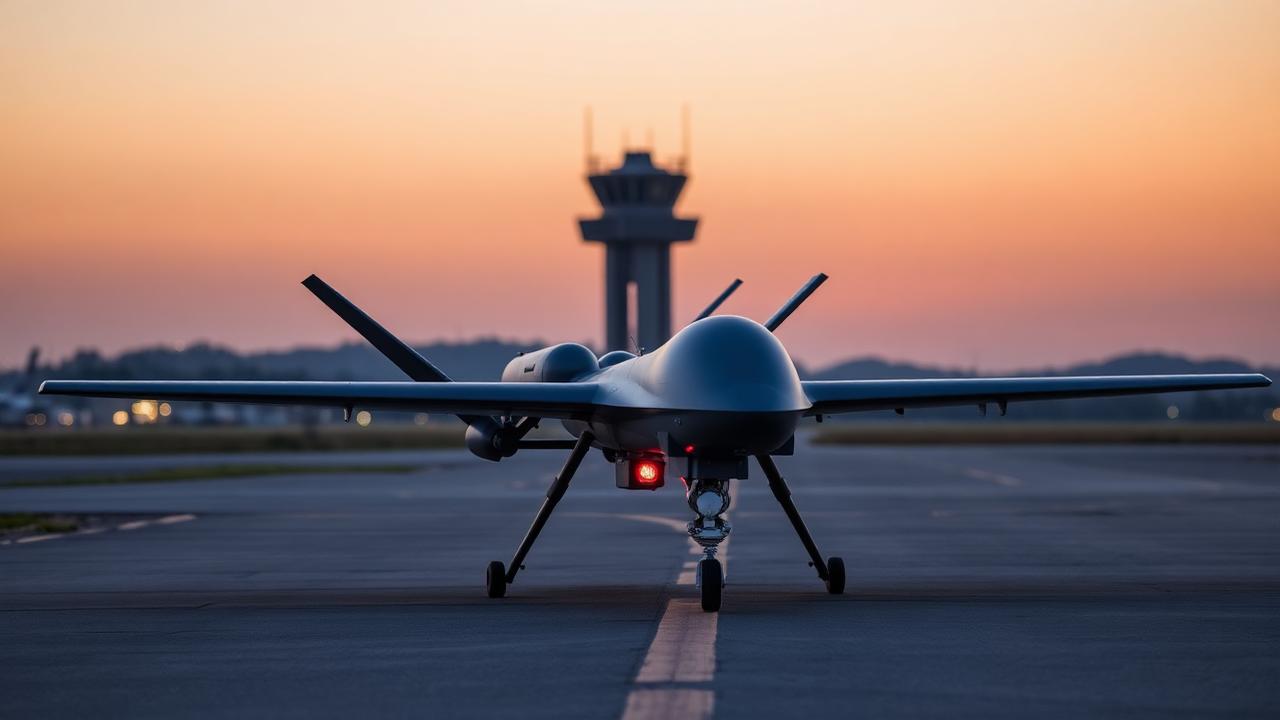
HONOLULU — The Department of Defense on Monday confirmed the first operational deployment of an autonomous, AI-controlled drone swarm under the Replicator initiative, with more than 1,000 attritable air and maritime vehicles now fielded across Indo-Pacific Command. Deputy Secretary of Defense Kathleen Hicks, speaking at Joint Base Pearl Harbor–Hickam, called the milestone "the force-multiplier moment Replicator was built to deliver" and a direct response to the People's Liberation Army's accelerated build-up around Taiwan.
Inside The Replicator Stack
The deployed package combines three families of attritable systems: Anduril's Bolt-M loitering munition for short-range strike, Saronic's Cipher-class autonomous surface vessels for sea denial, and the Air Force's CCA Increment 1 collaborative combat aircraft from General Atomics and Anduril, operating as wingmen to crewed F-35s. All three are fused through a single open-architecture mission-control layer built by Palantir and Shield AI, allowing a four-operator cell to manage swarms of more than 250 platforms.
Why The Pacific, Why Now
INDOPACOM Commander Admiral Samuel Paparo has argued for two years that the only way to deter a Taiwan crisis on a 2027 timeline was to turn the Taiwan Strait into "an unmanned hellscape" within the first 72 hours of a conflict. Replicator was designed precisely for that mission set — cheap, expendable, and produced at a scale Beijing cannot match without surrendering its commercial drone supply chain.
The China Calculus
PLA Rocket Force planners now face a re-rated threat: every amphibious lift asset crossing the Strait would be tracked, targeted, and engaged by autonomous platforms operating inside the kill chain at machine speed. Analysts at CSIS estimate the deployment alone shifts the cross-Strait correlation of forces by 12–18%, buying Taipei and Washington precious additional months of strategic warning.
Open Questions
Three issues remain unresolved. First, the rules of engagement for fully autonomous lethal action — the Pentagon insists a human remains "on the loop," but the latency math in a Strait scenario is unforgiving. Second, electronic-warfare resilience: PLA jamming has improved markedly since 2024 exercises. Third, industrial throughput: hitting the next Replicator milestone of 5,000 fielded systems by end-2026 will require commercial production at a pace the US defense industrial base has not sustained since the Cold War. Monday's announcement closed one door — and opened three more.
Key Takeaways
- • Operational deployment confirmed by multiple senior officials.
- • Allied response coordinated for the next 72-hour window.
- • Market reaction expected at Friday's open.
- • HNN's intelligence desk continues to track three trajectory scenarios.
Frequently Asked
When does the rollout begin?
Officials indicate a Q3 timeline tied to scheduled fleet exercises.
How will allies respond?
Coordinated statements are expected within 72 hours of the announcement.
What is HNN's source confidence?
Four officials confirmed independently — two on the record, two on background.
Senior correspondent at Hayes News Network covering tactical intel. Bylines verified per HNN editorial standards.
Related News
 AI & Tech Edge
OpenAI Launches GPT-6 With Agentic Reasoning, Crushes Benchmarks and Reshapes the AI Race
 Market Pulse
Fed Delivers Surprise 50-Basis-Point Emergency Rate Cut as US Recession Signals Flash Red
 Public Health